Search This Blog

Thursday, November 22, 2007

Everything Needs To Be Perfect In Paradise!

by By Silvia Uribe

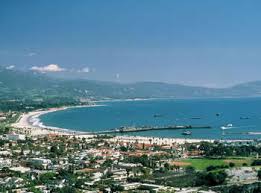
We, Santa Barbarans, have an attitude problem. Yes, we all do! Locals, implanted, Caucasian, Latino, old, young, Asian, and African American…we have collectively convinced each other and ourselves that we are not only deserving but entitled to all good things that life has to offer. Climate MUST be perfect! Anything over or below 70 degrees we perceive to be a personal attack; our news broadcast have a "storm watch" every time there's a drizzle, and a "wind advisory" when we can barely feel the wind blowing. We also have so many not for profit organizations that not even the most knowledgeable community members can agree on whether there are 500 or upward to 700. Our every possible need has been anticipated, and people are ready to help us at any given moment. We have glorious vistas that we take for granted, and many of us hardly ever get out to enjoy the beach, mountains, creeks, and sunsets, that people can only dream about in other places.

To prove my point, I have the perfect example. Not too long ago, I was speaking with an acquaintance who was complaining about how the ash from the recent fires made it impossible for her to go out to exercise those days, and how the hot climate due to the so called "inversion", made it difficult to keep her armpits dry (yuck!). As she was complaining about her perceived "problems", I was wondering, how self-absorbed can we get. If she had only thought about the 500,000 plus people who were displaced, according to the news, and who-knows-how many who had lost their homes, their pets, and all their possessions, she would have not dared complain.

When in fact there is a stronger breeze, we wear thick coats and gloves, and many people prefer to stay inside their homes. How can I say this? The fact that the breeze may blow stronger than usual, does not necessarily mean that it is colder. Distance is another complaint. If we have to travel more than 5 miles, we think that our destination is far, and thus we take into consideration the wear-and-tear of our cars, not to mention the gas expense. Planning a trip from Santa Barbara to Goleta, or vice versa? Forget it, too far! I ask myself, do we really need to have everything at our fingertips? Having lived in a big city, where a 1-hour trip is considered a fast and easy one, I am not able yet to echo that complaint. This brings me to the amount of traffic in Santa Barbara. When there are more than five cars waiting to go at any given stop light, we consider it heavy traffic! Oh, and yes, we are livid about bad drivers, as well. You know, people who do the California stop, who honk the horn, who do not respect the four way stop, who forget to use their blinkers, and cut in front of other cars; and about pedestrians, who don't know where to cross the streets. I've heard locals complain about (so many) tourists, about the downtown bar area (too much noise), and about Fiesta. (Ah, the horror! Too many drunk people, tourists, and noise combined. "Let's kill it!" some say, or at least, "Let's get out of town!").

Everything needs to be perfect in paradise!

The fact of the matter is that in order to be so, paradise needs to have a little bit of everything to please everyone. For instance, when I came to live here with my family (imported directly from one of the most populated cities in the world), I felt I needed to see more people than the too few neighbors visible on the streets in the Samarkand area, where we used to live. It felt too lonely for me and a little eerie too. That's how I started our tradition of going to State Street to sit outside the Coffee Bean and Tea Leaf to have coffee, people-watch, and talk to different people (a mosaic artist, a landlord, a county employee, a commercial writer, a parts technician, and a nurse), whom after ten plus years, we consider family.

So yes, we Santa Barbarans (born here or by adoption) might have an attitude problem. But who can blame us? Even the rich and famous, who could live anywhere, have joined us for the ride. In the end we're here all together; we are happy; we learn; and we are culturally richer because of each other.

There is no doubt. We live in Paradise!

Silvia Uribe is a freelance writer with a Latino perspective.

Cross-posted at Edhat.com

Tuesday, October 23, 2007

It Had To Be The Big Apple!

A few days ago I went to bed with the appeasing notion that it is not only mine and a few other voices anymore. It’s now two cities in the US which seem to have come to the same conclusion. Recently, the cosmopolitan, advanced, diverse, New York City finally approved the issuance of Driver Licenses to undocumented immigrants. This is the kind of attitude and vision that sets the Big Apple apart from most other cities.

The way I see it, this is something that needs to happen everywhere and soon. Why? Let’s analyze it. First and foremost we need to clearly understand that having a driver’s license only means that one knows how to drive, that we are in reality, the person we claim to be, and it also provides our DOB plus our permanent residence address. That’s all! It does not mean absolutely anything more than that. As we know, a driver’s license, along with the title of the car, also gives us the opportunity to get car insurance (which is mandatory in the State of California.)

So far, so good I hope. We’re just talking about the facts of an identification document which confirms that we know how to operate a vehicle. Great!

Now, let’s pretend that we are peacefully driving on the beautiful Santa Barbara streets, and we have an accident; our vehicle is totaled and we end up going to the ER with (let’s not be dramatic) minor injuries. A few days later, when we look at the police report we are faced with several unsettling facts like the other car did not have insurance, the driver did not have a DL and that he or she possibly, gave a fake name. How do you like this case scenario? Maybe it has happened to you, and you know exactly how it feels. If not, I’m sure just thinking about it gives you the chills as it does to me. This is only one reason why every driver should have a license.

It seems like there’s no logical argument against it. It is what better protects everyone, and this is precisely the main responsibility that the government has. But there’s still opposition. Some argue that undocumented immigrants should not be able to obtain any legal document. Ok, this is like the pink elephant in the middle of the room! Not because they don’t have a DL they’re not going to drive, hello! What will continue to happen is that a number of people will still be unidentified, and unaccounted for. It seems like some sort of political agenda is cashing in on the fear that some already have of those undocumented. But even if it was true that undocumented immigrants are to be feared (forget altogether the wrongfulness of stereotyping), wouldn’t we really want to know who they are in order to be able to catch them as soon as they “make their first unlawful move”?

The reality is that the vast majority of documented and undocumented immigrants are here to work hard, which is not only beneficial to them and their families, but also to our country which has historically greatly profited from their labor. And yes, there are other practical reasons why they should have a DL. Without a legal ID people cannot only drive freely on our roads, but they cannot open a bank account, cash a check at a bank, or start a credit history. I have the distinct feeling that this injustice is not what our founding fathers had in mind when they chose to have the “liberty and justice for all” declaration in our Pledge of Allegiance.

Anyway, I will rest this political battle for now with the hope that one by one other cities in the U.S. (including our beautiful Santa Barbara) will soon come to reason, and give the green light to DL’s for ALL drivers.

In the meantime, I wish you ¡Buena suerte y hasta la próxima!

Silvia Uribe is a freelance writer with a Latino perspective.

Cross-posted at Edhat.com

Saturday, September 29, 2007

Latino Kids In Gangs...Are Parents To Blame?

In light of all the present gang activity in the Central Coast, many people ask themselves and those who might have an answer why is it that these, at times, very young kids are out and about with no parental supervision of their activities, their friends or the bad habits they might be picking up along the way. People have asked me as recently as last Sunday, when I was invited to talk about the Mexican/Latino cultural heritage, how is it possible to talk about the importance Latinos give to family, and at the same time completely ignore their children. Now, that’s not necessarily what happens, although I recognize why the perception is such.

Raising our children:
In order to start from the beginning I should say that the way children are raised here is, for the most part, foreign to us Latinos. Children here have a lot of more freedom, more privacy and more decision making opportunities. In our Latino culture one acquirLes those “privileges” with age. Kids are supposed to obey what mom and dad, and the grandparents, and the teachers say. Parents never leave it up to the kids whether they want to do something or not. They just tell their kids what to do, period. By the same token, a kid in the Latino culture is rarely allowed to lock their bedroom door not letting anyone – especially his/her parents – to come in. We feel that children’s activities need to be supervised to prevent them from getting into trouble. Why we think like that? The perfect example on this is the episode at Columbine HS where both assailants had an arsenal kept in their room, and the parents never knew about it.

The break-down.
When Latinos come to the US we find out, the hard way sometimes, that kids are treated differently here. The structure for kids is not as “rigid”. In fact, compared to the kind of structure we’re used to, we feel that there’s none here for us to rely on, and to make kids abide by the rules. I remember a time when I was at the beach with my then, 4 year old daughter. I was reprimanding her because she kept running into the water on her own, while I was busy with her sister. At some point, I held her hand preventing her from running off once more. She was yelling as only a kid with a tantrum can. A woman came out of nowhere, and proceeded to threaten me that if I didn’t stop my reprimand, and let “the poor little girl” go, she would call the police on me. Of course she backed off immediately when I told her that I would hold her responsible if that “poor little girl” drowned. Boy… was I confused with the whole incident! The lady wanted me to let my daughter do as she wished? Or did she think it was a good idea to leave my other daughter by herself on the beach while taking care of the first one in the water? I am strong-spirited, so people do not intimidate me easily, but others frankly don’t know how to react or what to do. They feel their authority has been taken out of their hands, and they have not been given an effective/viable alternative to deal with children or teens’ strong will. Now, if we’re talking about school, parents are rarely made aware of any discipline and/or academic problems until it is too late, and the bad behavior has, unfortunately, become a habit for kids. It is then when parents throw their hands in the air, helpless and not knowing what to do.


My concern...
It is concerning that the immediate assumption is that Latino parents don’t care about their children, or that they don’t try to solve the problem. This assumption generates a lack of trust (“…what kind of people is this that don’t care about their children?”), and ill feelings against a race as a whole. I work on a daily basis with these families, and I have yet to hear a parent tell me that they don’t care about what happens to their kids, or that they are not afraid, more so than the rest of the community, to see their kids die because of street violence.

The solution…As usual, it all comes down to education. Yes, parent education in this case. There are great programs for parents out there, which combine prevention techniques on how to set boundaries and discipline, with making parents aware on how the system works here, what is available to them, and what their rights are. Of course these programs/trainings cost money that in many cases families don’t have. It would cost around $6,500 to train 30 individuals who will hopefully be able, in the future, to train other parents. If you are interested in more details or if you want to sponsor a training, please contact me

Silvia Uribe is a freelance writer with a Latino perspective.

Cross-posted at Edhat.com

Monday, September 24, 2007

Parenting Is Not a Popularity Contest!

By Silvia Uribe

After speaking to a desperate parent, I decided to share my personal experience as a mother of two with those who feel sad and fearful of not being able to do a good job with their kids.
We have always known that being a good parent has never been an easy thing. We seem to always be judged not only by our own kids, but also by estrangers who may see that our moral values, style or customs differ from the norm. But having faced these, I think that the challenge is well worth it.

It is more so, if you come from a different culture, country, era, or whatever other differences there are, like we do. Yes, I might not look of a particular background, but my husband I have certainly taught our children our Latino, Mexican/Spanish to be more specific, ways with the “oh, so expected” whining on their part. The main thing we taught them is that family comes first, before work, friends, money and everything else. We’ve taught them this by example. We have also taught them to not only interact with adults, but also to respect and learn from elders, and for instance, to have the courtesy of standing up and giving them their seat when a room is full, and no more seats are available; to say hello and good bye when there is a person as they come in or out of a place; to eat at the dinner table (with manners too), and to share the good and bad of the day. As they were growing up, I never let them stay over at their friends’ home, no matter how well I knew them, which raised many eyebrows among their peers’ parents. If this is not terrifying enough for many, allow me to share that locks on doors and drawers are never used in our home to preserve our “privacy” to the point of not knowing who or what is kept behind doors (remember the Columbine High School incident, and what an arsenal these boys kept in their rooms without the parents knowledge?) We substitute locks with respect and trust. When there was a party, I always made sure to talk to the parents of whoever invited them to make sure they were going to be present (I can still remember the rolling of my kids eyes every time they handed me their friends' parents’ phone number). During high school age, I always suggested that the party would be at our home, just to make sure that things would not get out of hand. Oh, and as far as camps go I went with them to most Girl Scout camps, and we had a lot of fun together (scary huh?) Among many other things, we taught them the value of waiting for things, of nurturing their spirit, and their mind, of observing and analyzing people and situations, and the value of being able to accept “no” for an answer, but also the ability to recognize when they should and shouldn’t be persistent about their desire.

We had rough times, in which (not surprisingly) they really didn’t particularly like me, since I was the vigilante eye upon them. In those situations I always ask one thing from them: TRUST. What they couldn’t see through the crystal of their youth was that we were also teaching them patience, reasoning, decision making skills, and of course, responsibility. At the same time, they were gaining self confidence, and they were creating a self image that did not depend on others’ opinions. There were, and still are, rules at home for everyone to follow, including us parents. So, when my oldest daughter asked me what would change for her at home when she was about to turn 18, the answer was very easy: NOTHING! She would still have to follow the rules, as the rest of us did. Of course, as they were growing in age and maturity, they acquired a lot of more freedom, they started driving, working, socializing, and filling their time with fun and interesting activities like traveling the world (without us parents), to the point that the “fight” for freedom became a moot point, since they earned it with responsibility.

Yes, we had to be very firm, even strict at times, and it was certainly not always easy. Parenting is not a popularity contest, alright! We constantly had to endure the never ending “…we are not in Mexico anymore, mom…”, and the “…but all my friends do it…!” The truth of the matter is that we adapted and adjusted to a new culture, and we perfectly fit in the community, but we kept our identity. We had to teach our kids according to who we were, our moral values, and our culture. We had to make some tough decisions, risking being perceived by our children as “the bad guy”, but, in our view, that’s an ok price compared with the peace of mind of knowing that they’re well equipped for life now.

Our daughters have had a successful school career; one of them graduated from UCSB, holds a professional job in town, and is creating a name for herself in the community. The other one is still a student, has a job, and a very nice group of friends. But what I see as the most important thing is that we enjoy a wonderful, loving, and strong family relationship, where support, trust, loyalty, and respect are present for all of us all the time. We know we can count on each other! Hopefully, they will be able to replicate this, one day, with their own family.

So, if this kind of situation sounds familiar, whether or not you’re from a different background, don’t lose your calm, your cool, your charm or your strength when faced with difficult periods with your children. Recognize that you are just in the middle of the tunnel, trying to get to the other side, and you will….with time and patience. In the meantime, know that the prize to that patience and persistence will be to know that your children are strong, happy and prepared to fly on their own. So, for us at this point I can only say: so far, so good!

Silvia Uribe is a freelance writer with a Latino perspective.